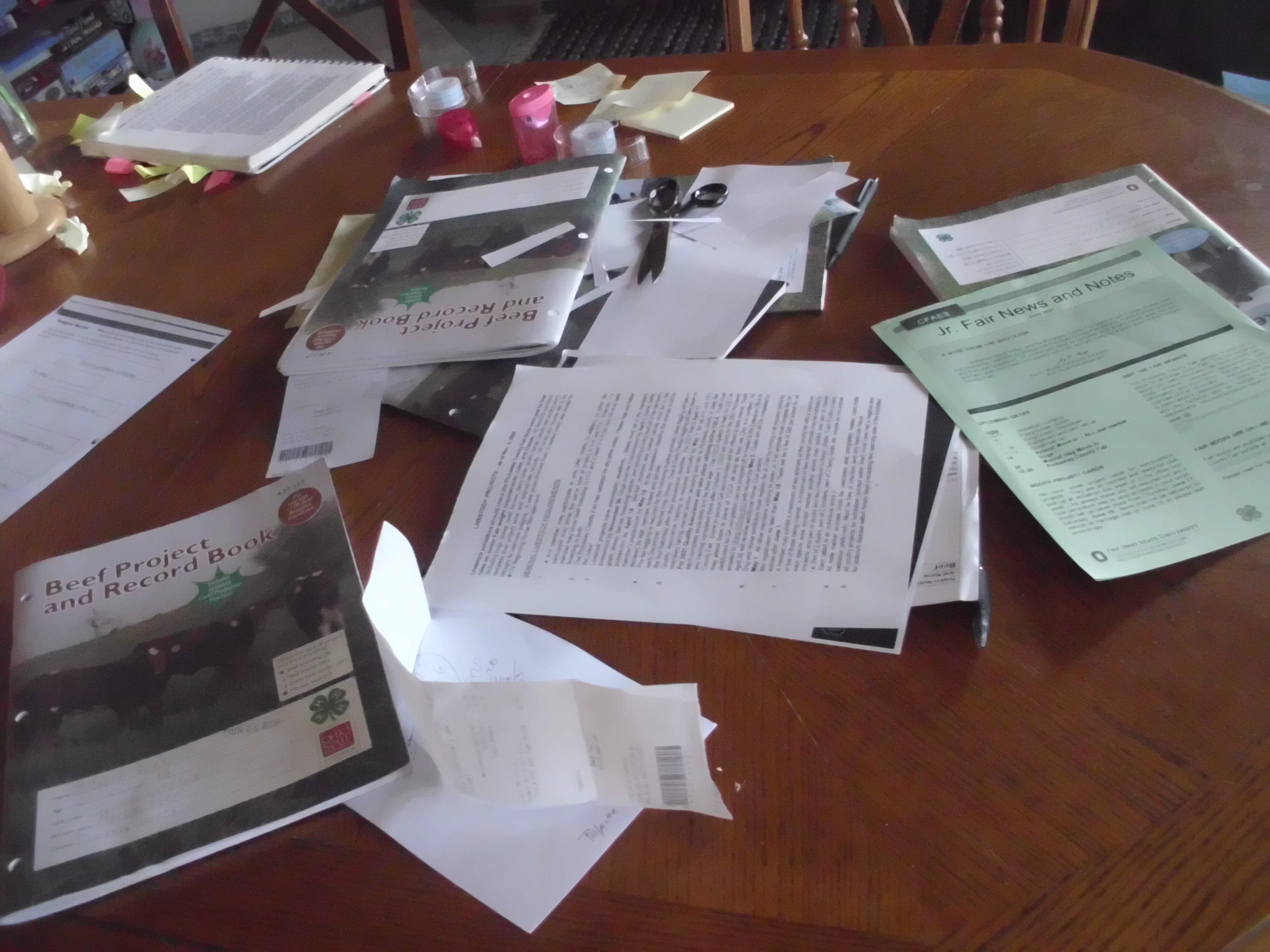
As I cleaned up the table after 4-H interview judging for the beef projects, I looked through all that was strewn about. What had the kids needed? What information was used? What skills did they learn? These books required a great deal of work.
Their records consisted of:
– expenses such as feed, bedding, equipment and show supplies
-income
-budgets
-profit and loss statements
-birthdates and pedigree information
-weights and rate of gain
-feed ration mixtures
-written essay about a cattle topic
-studied the various breeds of beef
-studied animal anatomy
-learned about different types of feed
-studied medicine labels
-studied feed tags
-written project agreement with a parent or project helper
And, all these things were just to complete the project book.
They also had to complete an in-person interview about their project, explaining all they knew and had learned. This was their time to share about the care of their animals and all they do on a daily basis to raise them.
On a daily basis, the kids feed the cattle and make sure they have access to plenty of water. They clean out pen space in the barn if needed. They do a general well check of their health.
As fair approaches, the kids put in many hours in the barn and pasture. They work with their animals so they will walk while being lead on a halter. They practice with foot placement so the judge will see the animal at it’s best. They also give baths, lots and lots of baths! When the weather is warm, everyone seems to enjoy the water to cool off. Using soap and massaging it into the hair gets the kids close to the animal and helps build a bond with the animal.
The kids all learn so much from these experiences. They can apply skills from every academic area to real life.
We reflect on all the work they do during the summer and realize how much they grow as a person by participating in these beef projects. We also know they are already learning these things all year round by living on a farm. The book just makes them write it down.
–
 A Farm Wife, A Farm Life